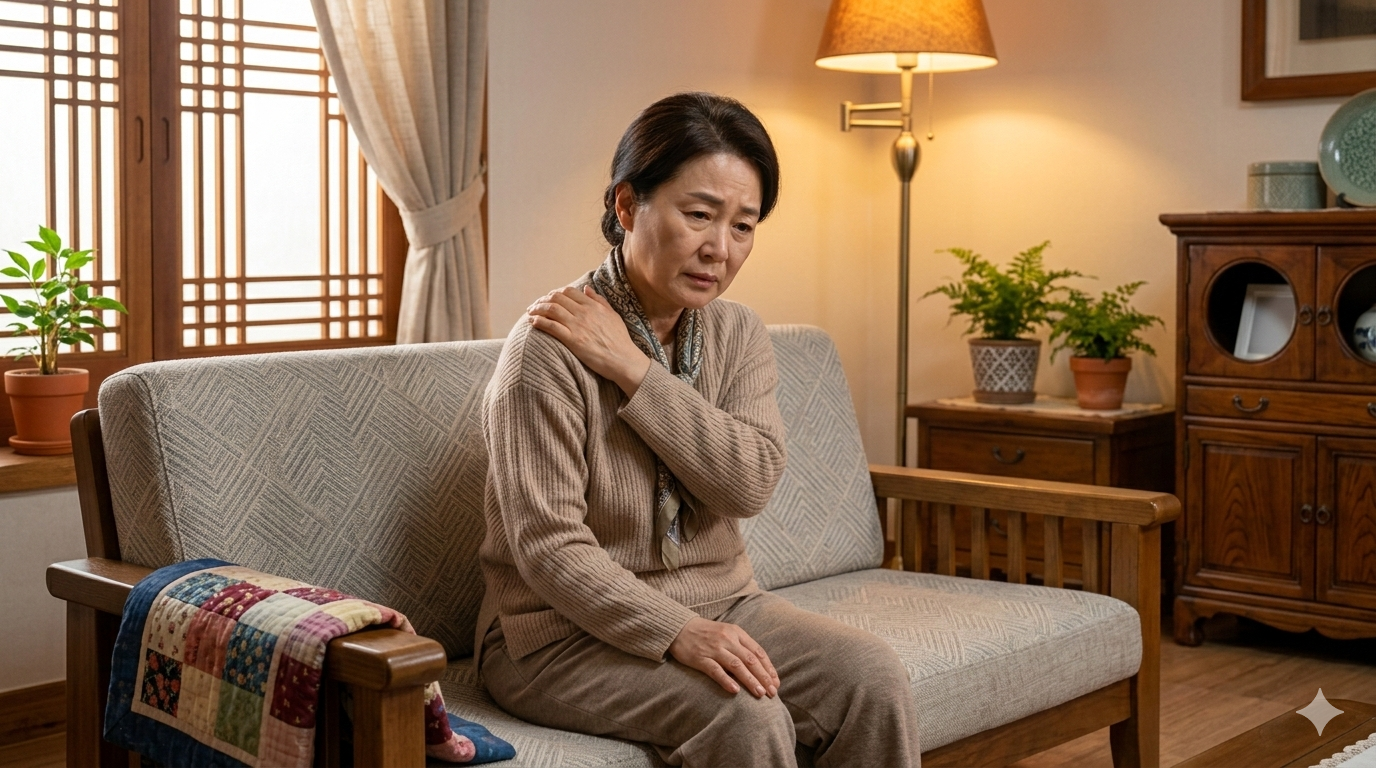
Menopause: Not Just Aging — A Time of Recalibration
“I feel like my body has become a stranger.”
“Hot flashes at night, then freezing cold. My heart races for no reason.”
If you’re between 45 and 55 and experiencing symptoms that seem to come from everywhere and nowhere, your body may be going through its most significant transition since puberty.
What’s Actually Happening
The Medical Facts
Menopause is defined as 12 consecutive months without menstruation, typically occurring between ages 45–55. The North American Menopause Society (NAMS) reports that up to 80% of women experience vasomotor symptoms (hot flashes, night sweats), and symptoms can last 7–10 years on average.
Male menopause (andropause) is also real — testosterone declines about 1% per year after age 30, with symptoms becoming noticeable in the 50s–60s.
The Korean Medicine Perspective
The classic Korean Medicine text Huangdi Neijing (黃帝內經) describes a concept called “Cheon-gye” (天癸) — the body’s reproductive essence that naturally wanes around age 49 in women and 56 in men. This isn’t viewed as disease, but as a major transition point requiring the body to find a new equilibrium.
Korean Medicine identifies three common patterns:
- Heat-dominant type: Hot flashes, night sweats, irritability, facial flushing — “the thermostat is broken”
- Fatigue-dominant type: Exhaustion, weight gain, brain fog, low motivation — “the battery drains too fast”
- Pain-dominant type: Joint stiffness, muscle aches, frozen shoulder — “the lubrication has dried up”
Real Clinical Experience
At Jibon Clinic, menopausal patients often arrive saying “I’ve been to every department and nothing’s wrong.” That’s because menopause isn’t a single organ problem — it’s a whole-system recalibration. Korean Medicine excels at treating this kind of multi-system imbalance through herbal medicine that adjusts fluid metabolism, hormone balance, and autonomic function simultaneously.
Can Korean Medicine Be Combined with HRT?
Yes. Herbal medicine can complement Hormone Replacement Therapy (HRT) and may help manage symptoms that HRT doesn’t fully address, such as digestive issues, fatigue, or mood changes.
Frequently Asked Questions
How long does Korean Medicine treatment for menopause take?
Most patients notice improvement within 4–8 weeks. Treatment duration depends on symptom severity, typically 3–6 months for significant stabilization.
Do men experience menopause too?
Yes. Male menopause (andropause) involves gradual testosterone decline and can cause fatigue, mood changes, decreased libido, and muscle loss. Korean Medicine can help support this transition as well.
Is menopause treatment covered by insurance?
Acupuncture and Motae Hwangol therapy (Chuna) are partially covered by Korean National Health Insurance. Herbal medicine prescriptions are typically out-of-pocket.
Jibon Korean Medicine Clinic
Gwangju: Dr. Kim Tae-gang (Musculoskeletal/Motae Hwangol, 18 yrs) & Dr. Noh Jeong-eun (Autonomic/Circulation, 22 yrs, Ph.D.)
Jeonju: Dr. Noh Young (Motae Hwangol specialist)
답글 남기기