Long COVID: Why Recovery Looks Different for Everyone
“It’s been months since I tested negative, but I still can’t think clearly.”
“I used to run 5K easily. Now I’m exhausted after walking up stairs.”
If COVID is “over” but your body hasn’t gotten the memo, you may be experiencing Long COVID — and you’re not alone.
Understanding Long COVID
The Medical Facts
The WHO defines Long COVID (Post-COVID Condition) as symptoms persisting or appearing 3 months after infection, lasting at least 2 months, with no other explanation. The ECDC (2023) reports that approximately 10–20% of COVID patients develop long-term symptoms.
Over 200 different symptoms have been reported, but the most common are: fatigue, brain fog, shortness of breath, joint/muscle pain, and sleep disturbances.
The Korean Medicine Perspective
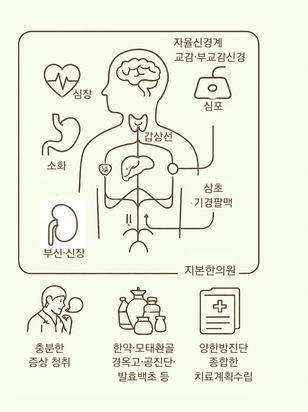
Korean Medicine analyzes Long COVID through three axes:
- Residual inflammation (餘熱/yeoyeol): The acute infection is gone, but low-grade inflammation persists in tissues
- Vital energy depletion (正氣虛/jeonggiheo): The immune battle consumed the body’s reserves, leaving chronic fatigue
- Organ-level damage: Lungs, gut, brain, and autonomic system may have sustained functional damage
Different patients present with different dominant axes, which is why symptoms vary so widely from person to person. Korean Medicine’s strength is in identifying which axis is dominant and tailoring treatment accordingly.
Real Clinical Experience
At Jibon Clinic, we’ve observed that Long COVID patients fall into recognizable patterns. Some have persistent low-grade fevers and inflammatory markers — they need inflammation-clearing herbs. Others have profound fatigue with normal lab results — they need energy-restoring treatment. Many have both. Treatment is adjusted as the patient’s condition evolves.
Frequently Asked Questions
Can Korean Medicine help if I’ve had Long COVID for over a year?
Yes. Even chronic cases can improve. The treatment approach shifts from acute inflammation management to deep constitutional recovery.
Should I stop my Western medications to try Korean Medicine?
No. Korean Medicine can be used alongside Western treatments. Never stop prescribed medications without consulting your prescribing doctor.
What does treatment typically involve?
A combination of herbal medicine (tailored to your specific symptom pattern), acupuncture (for autonomic regulation and circulation), and lifestyle guidance. Treatment plans are individualized.
Jibon Korean Medicine Clinic
Gwangju: Dr. Kim Tae-gang (Musculoskeletal/Motae Hwangol, 18 yrs) & Dr. Noh Jeong-eun (Autonomic/Circulation, 22 yrs, Ph.D.)
Jeonju: Dr. Noh Young (Motae Hwangol specialist)
답글 남기기