Frozen Shoulder: Should You Just Wait It Out?
“One day I just couldn’t lift my arm anymore.”
“I wake up every time I roll onto that side.”
If you’re over 40 and your shoulder is gradually becoming stiffer and more painful without any injury, you may have frozen shoulder (adhesive capsulitis).
What is Frozen Shoulder?
The Medical Facts
Frozen shoulder (adhesive capsulitis) occurs when the shoulder joint capsule becomes inflamed and fibrotic, causing pain and progressive loss of motion. It typically affects people aged 45–65 and is 2–4 times more common in diabetics.
The hallmark sign: both active AND passive movement are restricted. Even if someone else tries to move your arm, it won’t go.
Why Does It Happen Around Age 50?
Recent aging research (Stanford University, Nature Medicine 2019) shows that aging isn’t gradual — it occurs in bursts at specific ages, particularly around mid-40s and 60. The shoulder is the body’s most mobile joint and requires significant fluid lubrication. When age-related fluid metabolism decline hits, the shoulder is often the first to suffer.
The Korean Medicine Perspective
Korean Medicine calls this “Gyeon-bi” (肩痺) — stagnation of qi and blood circulation around the shoulder, leading to inadequate nourishment of the joint capsule, tendons, and ligaments. As the body’s fluid (津液/jinye) decreases with age, joint tissues lose elasticity and become prone to chronic inflammation.
The Three Phases — And Why Timing Matters
- Freezing phase (painful): Inflammation is active. Focus on pain management. Acupuncture + pharmacopuncture to reduce inflammation.
- Frozen phase (stiff): Inflammation subsides but the joint is locked. Begin gentle Motae Hwangol therapy (including Chuna) to restore range of motion.
- Thawing phase (recovery): Aggressive rehabilitation, stretching, and strengthening.
The mistake many people make: forcing movement during the freezing phase (making it worse) or doing nothing during the frozen phase (letting it stiffen further).
Korean Medicine Treatment Approach
- Acupuncture + Pharmacopuncture: Pain relief and local inflammation management
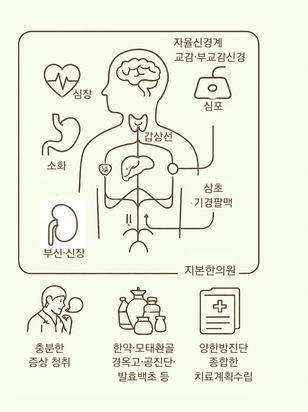
- Motae Hwangol therapy (including Chuna): Progressive joint mobilization — external rotation → abduction → forward flexion. Jibon Jeonju Clinic specializes in Motae Hwangol therapy (Chuna).
- Herbal medicine: Support circulation and address constitutional factors (especially if menopause is concurrent)
Frequently Asked Questions
Will frozen shoulder really heal on its own?
It often improves over 1–3 years, but many patients retain permanent range-of-motion limitations. Early treatment leads to faster, more complete recovery.
Is frozen shoulder related to menopause?
Yes. Women around menopause have higher rates of frozen shoulder. Estrogen decline may accelerate joint capsule fibrosis. Treating both conditions together improves outcomes.
Can I get Motae Hwangol therapy (Chuna) for frozen shoulder in Jeonju?
Yes. Jibon Jeonju Clinic (Dr. Noh Young) specializes in Motae Hwangol therapy (including Chuna) for frozen shoulder and other musculoskeletal conditions.
Jibon Korean Medicine Clinic
Gwangju: Dr. Kim Tae-gang (Musculoskeletal/Motae Hwangol, 18 yrs) & Dr. Noh Jeong-eun (Autonomic/Circulation, 22 yrs, Ph.D.)
Jeonju: Dr. Noh Young (Motae Hwangol specialist)
답글 남기기