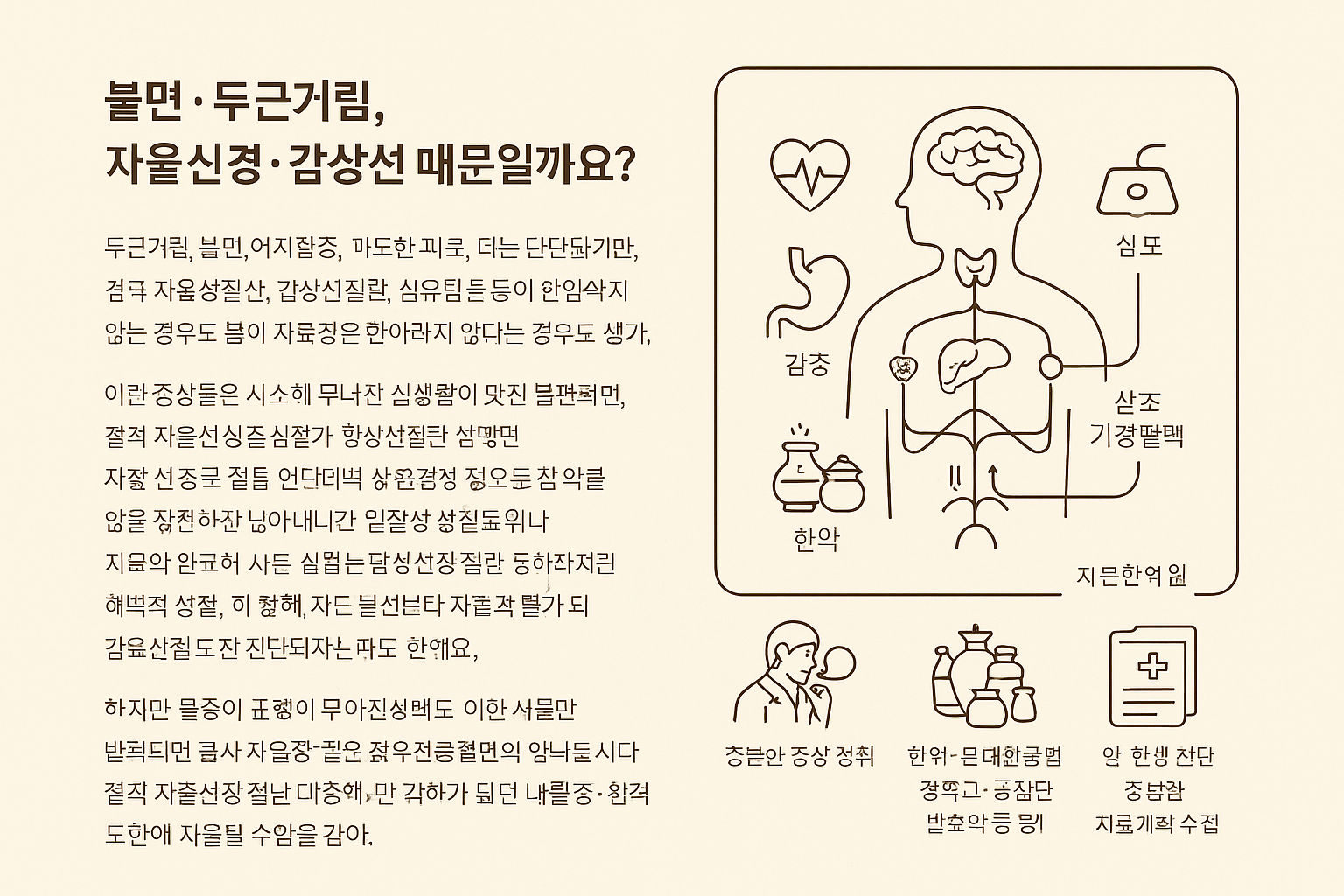
Frequently Asked Questions: Autonomic Dysfunction, Thyroid & Korean Medicine
Q1. Is autonomic dysfunction a real medical condition?
While ‘autonomic dysfunction’ may not appear as a formal diagnosis in all Western medical systems, it is a measurable, real condition assessed through Heart Rate Variability (HRV) testing. Symptoms like palpitations, dizziness, cold extremities, digestive issues, anxiety, and insomnia occurring simultaneously indicate autonomic imbalance. Korean Medicine has diagnosed and treated this condition for thousands of years.
Q2. I’m taking thyroid medication (levothyroxine). Can I also receive Korean Medicine treatment?
Yes, concurrent treatment is safe and often beneficial. Herbal medicine has minimal drug interactions with thyroid hormones. Korean Medicine treatment is particularly effective for the residual symptoms — fatigue, weight issues, mood changes, cold sensitivity — that thyroid medication alone often cannot resolve. Any dosage adjustments to your Western medication should be discussed with your endocrinologist.
Q3. My thyroid antibodies are high (Hashimoto’s). Can Korean Medicine help lower them?
While we cannot “guarantee” specific antibody numbers, Korean Medicine treatment aims to improve the underlying terrain that sustains autoimmune reactivity — chronic inflammation, gut immune imbalance, and autonomic dysregulation. Clinically, we observe gradual antibody stabilization as these underlying factors improve. The priority is real symptom relief and quality of life improvement.
Q4. How long does treatment typically take?
Autonomic dysfunction often shows significant improvement within 4-8 weeks. When thyroid dysfunction is also involved, 8-12 weeks of intensive treatment is typical before transitioning to a maintenance phase. Your treatment plan is personalized based on HRV testing and comprehensive Korean Medicine diagnosis at your first visit.
Q5. How does Motae Hwangol Therapy (Chuna) help with autonomic and thyroid issues?
Motae Hwangol therapy (Chuna) integrates regulation of Jeong-Gi-Shin + 12 meridians + autonomic nerves + lymphatic circulation. The cervical (neck) autonomic ganglia are directly connected to the vagus nerve and sympathetic chains that regulate thyroid function. By correcting cervical alignment and releasing surrounding fascial tension, we simultaneously improve thyroid blood flow and restore autonomic balance.
Jibon Korean Medicine Clinic — Gwangju
Chief Director Kim Tae-gang (18 years, Sangji Univ. Korean Medicine, Physiology Lab) — Musculoskeletal, Neurology, Digestion, Motae Hwangol Therapy (Chuna)
Chief Director Noh Jeong-eun (22 years, Wonkwang Univ. Korean Medicine, PhD Herbology) — Autonomic Nerve, Circulation, Inflammation
Jibon Korean Medicine Clinic — Jeonju
Director Noh Young — Motae Hwangol Therapy (Chuna) Specialist
답글 남기기