[카테고리:] 자율신경·갱년기

  • Facial Flushing & Edema FAQ | Jibon Korean Medicine Clinic

    Facial Flushing & Edema FAQ | Jibon Korean Medicine Clinic

    Facial Flushing & Edema FAQ

    Can Korean Medicine treat Facial Flushing & Edema?

    Yes. Herbal medicine, acupuncture, and Motae Hwangol therapy address both symptom relief and root cause improvement.

    Can I take Korean Medicine with Western medications?

    Yes. Maintain a 2-hour gap between medications. Inform your doctor of all current medications during consultation.

    How long does treatment take?

    Acute: 2-4 weeks improvement. Chronic/recurring: 3-6 months constitutional treatment. Individual results vary.

    Is treatment covered by insurance?

    Acupuncture, moxibustion are covered by Korean NHI. Motae Hwangol (Chuna) therapy: 20 sessions/year covered. Herbal medicine: self-pay.

    Which doctor will I see?

    Gwangju: Dr. Kim Tae-gang (musculoskeletal/neuro/digestive) or Dr. Noh Jeong-eun (autonomic/circulation/inflammation). Jeonju: Dr. Noh Young.


    Jibon Korean Medicine Clinic
    Gwangju: Dr. Kim Tae-gang & Dr. Noh Jeong-eun · Jeonju: Dr. Noh Young

  • Facial Flushing & Edema: What Your Face Tells About Your Health

    Facial Flushing & Edema: What Your Face Tells About Your Health

    What is Facial Flushing & Edema?

    Facial Flushing & Edema is a common chronic condition that often resists simple symptomatic treatment. Stress, immune imbalance, and lifestyle factors all play interconnected roles.

    Western Medical Approach

    Standard treatment typically involves medications (antihistamines, steroids, immunosuppressants). While effective for symptom control, these often lead to recurrence upon discontinuation and carry risks of long-term side effects.

    The Korean Medicine Perspective

    At Jibon Clinic, we approach Facial Flushing & Edema through three axes:

    • Autonomic balance: The core regulator of immune overreaction or suppression
    • Circulation: Local blood flow improvement as foundation for tissue recovery
    • Chronic inflammation: Herbal medicine and acupuncture to modulate accumulated inflammatory responses

    Motae Hwangol therapy (Chuna) integrates meridian and lymphatic regulation. Personalized herbal prescriptions address root causes.

    Treatment at Jibon Clinic

    With extensive clinical experience in treating Facial Flushing & Edema, we combine acute symptom relief with long-term constitutional improvement to reduce recurrence and improve quality of life.

    FAQ

    Can Korean Medicine effectively treat Facial Flushing & Edema?

    Yes. Through herbal medicine, acupuncture, and Motae Hwangol therapy, we address both symptoms and underlying constitution. Safe to combine with Western medications.

    How long does treatment take?

    Acute symptoms often improve within 2-4 weeks. Chronic or recurring conditions may need 3-6 months of constitutional treatment.


    Jibon Korean Medicine Clinic
    Gwangju: Dr. Kim Tae-gang & Dr. Noh Jeong-eun · Jeonju: Dr. Noh Young

  • 안면홍조·부종 자주 묻는 질문 (FAQ)

    안면홍조·부종 자주 묻는 질문 (FAQ)

    안면홍조·부종 자주 묻는 질문

    안면홍조·부종에 한의원 치료가 가능한가요?

    네. 한약, 침, 모태환골법(추나요법) 등으로 증상 완화와 근본 원인 개선 모두에 접근합니다.

    양약과 한약을 같이 먹어도 되나요?

    네. 2시간 이상 간격을 두고 복용하면 안전하게 병행할 수 있습니다. 복용 중인 약은 진료 시 알려주세요.

    치료 기간은 얼마나 걸리나요?

    급성 증상은 2~4주 내 호전, 만성·재발성은 3~6개월 체질 개선이 필요합니다. 개인차가 있습니다.

    보험 적용이 되나요?

    침·뜸·부항은 건강보험 적용, 모태환골법(추나요법) 연 20회 보험 적용. 한약은 비급여입니다.

    어떤 원장님이 진료하시나요?

    증상에 따라 김태강 대표원장(근골격·신경계·소화) 또는 노정은 대표원장(자율신경·혈류·염증)이 진료합니다. 전주는 노영 원장이 진료합니다.


    지본한의원

    광주 봉선동: 대표원장 김태강 (근골격·신경계·소화·모태환골법) · 대표원장 노정은 (자율신경·혈류·염증, 한의학박사)
    전주: 원장 노영 (모태환골법 전문)

  • 안면홍조·부종, 얼굴이 보내는 몸의 신호

    안면홍조·부종, 얼굴이 보내는 몸의 신호

    안면홍조·부종이란?

    안면홍조·부종은 현대인에게 흔한 만성 질환으로, 단순한 증상 치료만으로는 근본적 해결이 어렵습니다. 스트레스, 면역 불균형, 생활습관이 복합적으로 작용합니다.

    의학적 사실

    서양의학에서는 주로 약물(항히스타민제, 스테로이드, 면역억제제 등)로 증상을 관리합니다. 그러나 약물 중단 시 재발하는 경우가 많고, 장기 복용 시 부작용 우려가 있습니다.

    한의학적 해석

    지본한의원에서는 자율신경·혈류·염증 3축 관점에서 접근합니다:

    • 자율신경 불균형: 면역 반응의 과잉 또는 저하를 조절하는 핵심 축
    • 혈류 순환: 국소 부위의 혈류 개선이 조직 회복의 기반
    • 만성 염증: 체내 축적된 염증 반응을 한약과 침으로 조절

    모태환골법(추나요법)으로 경락과 림프 순환을 통합 조절하고, 체질 맞춤 한약으로 근본 원인에 접근합니다.

    지본한의원의 치료 경험

    오랜 임상 경험을 통해 안면홍조·부종 환자분들의 다양한 패턴을 파악하고 있습니다. 급성기 증상 완화와 장기적 체질 개선을 병행하여, 재발 빈도를 줄이고 삶의 질을 높이는 것이 목표입니다.

    자주 묻는 질문

    안면홍조·부종에 한방치료가 효과적인가요?

    네. 한약, 침, 모태환골법(추나요법) 등을 통해 증상 완화와 체질 개선 모두에 접근합니다. 양약과 병행 가능합니다.

    치료 기간은 얼마나 걸리나요?

    급성기는 2~4주 내 호전되는 경우가 많고, 만성 재발성인 경우 3~6개월 이상 체질 개선이 필요합니다.


    지본한의원

    광주 봉선동: 대표원장 김태강 (근골격·신경계·소화·모태환골법) · 대표원장 노정은 (자율신경·혈류·염증, 한의학박사)
    전주: 원장 노영 (모태환골법 전문)

  • Autonomic Dysfunction & Thyroid FAQ — Korean Medicine Treatment Guide

    Autonomic Dysfunction & Thyroid FAQ — Korean Medicine Treatment Guide

    Frequently Asked Questions: Autonomic Dysfunction, Thyroid & Korean Medicine

    Q1. Is autonomic dysfunction a real medical condition?

    While ‘autonomic dysfunction’ may not appear as a formal diagnosis in all Western medical systems, it is a measurable, real condition assessed through Heart Rate Variability (HRV) testing. Symptoms like palpitations, dizziness, cold extremities, digestive issues, anxiety, and insomnia occurring simultaneously indicate autonomic imbalance. Korean Medicine has diagnosed and treated this condition for thousands of years.

    Q2. I’m taking thyroid medication (levothyroxine). Can I also receive Korean Medicine treatment?

    Yes, concurrent treatment is safe and often beneficial. Herbal medicine has minimal drug interactions with thyroid hormones. Korean Medicine treatment is particularly effective for the residual symptoms — fatigue, weight issues, mood changes, cold sensitivity — that thyroid medication alone often cannot resolve. Any dosage adjustments to your Western medication should be discussed with your endocrinologist.

    Q3. My thyroid antibodies are high (Hashimoto’s). Can Korean Medicine help lower them?

    While we cannot “guarantee” specific antibody numbers, Korean Medicine treatment aims to improve the underlying terrain that sustains autoimmune reactivity — chronic inflammation, gut immune imbalance, and autonomic dysregulation. Clinically, we observe gradual antibody stabilization as these underlying factors improve. The priority is real symptom relief and quality of life improvement.

    Q4. How long does treatment typically take?

    Autonomic dysfunction often shows significant improvement within 4-8 weeks. When thyroid dysfunction is also involved, 8-12 weeks of intensive treatment is typical before transitioning to a maintenance phase. Your treatment plan is personalized based on HRV testing and comprehensive Korean Medicine diagnosis at your first visit.

    Q5. How does Motae Hwangol Therapy (Chuna) help with autonomic and thyroid issues?

    Motae Hwangol therapy (Chuna) integrates regulation of Jeong-Gi-Shin + 12 meridians + autonomic nerves + lymphatic circulation. The cervical (neck) autonomic ganglia are directly connected to the vagus nerve and sympathetic chains that regulate thyroid function. By correcting cervical alignment and releasing surrounding fascial tension, we simultaneously improve thyroid blood flow and restore autonomic balance.


    Jibon Korean Medicine Clinic — Gwangju
    Chief Director Kim Tae-gang (18 years, Sangji Univ. Korean Medicine, Physiology Lab) — Musculoskeletal, Neurology, Digestion, Motae Hwangol Therapy (Chuna)
    Chief Director Noh Jeong-eun (22 years, Wonkwang Univ. Korean Medicine, PhD Herbology) — Autonomic Nerve, Circulation, Inflammation

    Jibon Korean Medicine Clinic — Jeonju
    Director Noh Young — Motae Hwangol Therapy (Chuna) Specialist
  • Autonomic Dysfunction & Thyroid Disorders — A Korean Medicine Approach to Root-Cause Treatment

    Autonomic Dysfunction & Thyroid Disorders — A Korean Medicine Approach to Root-Cause Treatment

    Fact — The Autonomic-Thyroid Connection

    Autonomic dysfunction (dysautonomia) is a real, measurable condition assessed through Heart Rate Variability (HRV) testing. Thyroid disorders affect 3-5% of adults clinically, and when including subclinical cases, the number rises to over 10%.

    • The critical link: Thyroid hormones directly regulate autonomic nerve sensitivity; conversely, autonomic imbalance affects the Hypothalamic-Pituitary-Thyroid (HPT) axis
    • Treatment gap: Levothyroxine normalizes lab values effectively, yet approximately 15% of hypothyroid patients continue experiencing fatigue, weight gain, and cognitive issues despite normal TSH levels (Thyroid, 2019)

    Interpretation — Korean Medicine’s 3-Axis Framework

    1. Autonomic Nerve Axis: Heart-Kidney Disconnection (Simsin Bulgyo/心腎不交)

    In Korean Medicine, when the ‘Heart fire above’ and ‘Kidney water below’ lose communication, it creates Simsin Bulgyo (Heart-Kidney Disconnection). In modern terms, this corresponds to simultaneous HPA (stress) axis and HPT (thyroid) axis dysregulation — explaining why insomnia, palpitations, cold extremities, and lethargy appear together.

    2. Blood Circulation Axis: Blood Stasis (Eohyeol/瘀血)

    The thyroid gland has one of the highest blood flow rates per gram of any organ. When microcirculation around the thyroid decreases, hormone synthesis and secretion efficiency drops. Korean Medicine’s ‘Blood Stasis’ concept encompasses this microcirculatory impairment at the tissue level.

    3. Inflammation Axis: Phlegm-Fluid (Dameum/痰飲) and Autoimmune Response

    Hashimoto’s thyroiditis, the most common cause of hypothyroidism, is an autoimmune condition. Korean Medicine’s ‘Phlegm-Fluid’ — abnormal fluid retention in the body — describes the terrain that sustains autoimmune reactivity. Without clearing this terrain, immune misfiring continues.

    Real Experience — Jibon Clinic’s Integrated Approach

    Treatment Application
    Personalized Herbal Medicine One person, one formula — designed for Heart-Kidney disconnection, Qi-Yin deficiency, or Phlegm-Fluid patterns
    Acupuncture Key autonomic points (Neiguan, Shenmen, Taichong, Sanyinjiao) to restore HPA-HPT axis balance
    Pharmacopuncture Herbal extract injection near thyroid-related points to improve microcirculation and local immune regulation
    Motae Hwangol Therapy (Chuna) Integrated regulation of Jeong-Gi-Shin + 12 meridians + autonomic nerves + lymphatic circulation — especially cervical autonomic ganglia stimulation for thyroid function normalization

    Clinical Note: A woman in her 30s on levothyroxine for hypothyroidism presented with persistent fatigue, weight gain, and low mood despite normal TSH. Korean Medicine diagnosis: Heart-Kidney disconnection + Phlegm-Fluid pattern. After 8 weeks of herbal medicine and acupuncture: fatigue reduced by 70%, 2kg weight loss, mood significantly improved. Western medication was maintained in coordination with her endocrinologist.


    Jibon Korean Medicine Clinic — Gwangju
    Chief Director Kim Tae-gang (18 years, Sangji Univ. Korean Medicine, Physiology Lab) — Musculoskeletal, Neurology, Digestion, Motae Hwangol Therapy (Chuna)
    Chief Director Noh Jeong-eun (22 years, Wonkwang Univ. Korean Medicine, PhD Herbology) — Autonomic Nerve, Circulation, Inflammation

    Jibon Korean Medicine Clinic — Jeonju
    Director Noh Young — Motae Hwangol Therapy (Chuna) Specialist
  • 자율신경실조증·갑상선 자주 묻는 질문 (FAQ) — 한의원 치료 안내

    자율신경실조증·갑상선 자주 묻는 질문 (FAQ) — 한의원 치료 안내

    자율신경실조증·갑상선 FAQ

    Q1. 자율신경실조증은 진짜 병인가요?

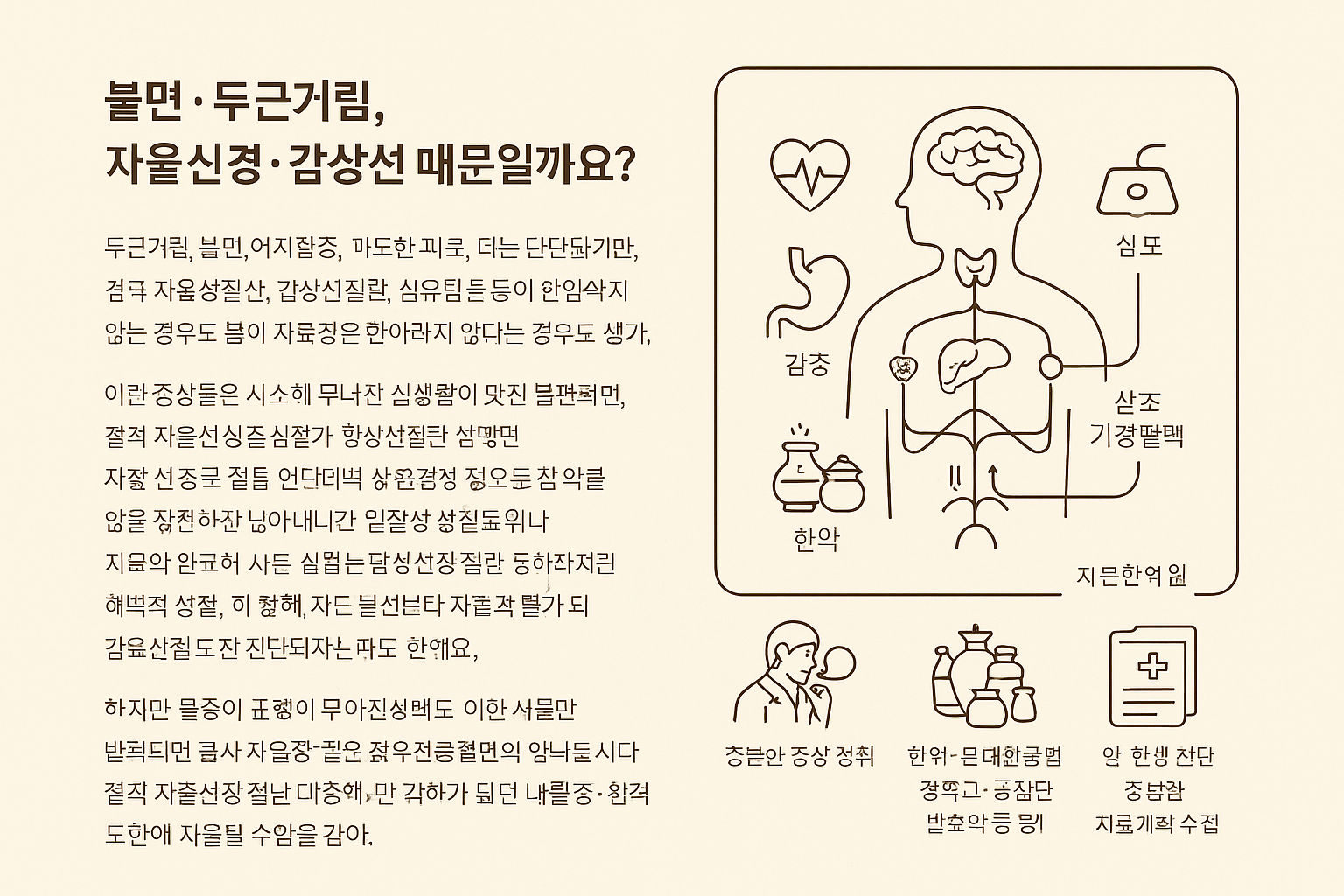
    ‘자율신경실조증’은 공식 질병 분류에는 없지만, 심박변이도(HRV) 검사로 객관적으로 평가할 수 있는 실재하는 상태입니다. 두근거림, 어지러움, 손발 저림, 소화불량, 불안, 불면 등 다양한 증상이 동시에 나타나며, 이는 자율신경(교감·부교감)의 균형이 무너진 상태를 의미합니다. 한의학은 이 상태를 수천 년간 진단하고 치료해 왔습니다.

    Q2. 갑상선약(레보티록신)을 먹고 있는데 한의원 치료를 받아도 되나요?

    네, 병행 치료가 가능합니다. 한약은 갑상선 호르몬제와 약물 상호작용이 적으며, 오히려 갑상선약만으로 해결되지 않는 피로, 체중, 기분 저하, 냉증 등의 잔여 증상을 한의학 치료로 개선할 수 있습니다. 양약의 용량 조절은 반드시 담당 내분비내과 선생님과 상의합니다.

    Q3. 갑상선 항체 수치가 높은데(하시모토) 한의학으로 낮출 수 있나요?

    직접적으로 항체 수치를 ‘약속’하기는 어렵지만, 한의학 치료를 통해 자가면역 반응의 기질적 환경(만성 염증, 장내 면역 불균형)을 개선하면 항체 수치가 점진적으로 안정화되는 임상 사례를 경험하고 있습니다. 중요한 것은 수치 자체보다 증상의 실질적 개선과 삶의 질 향상입니다.

    Q4. 어떤 증상이 있을 때 자율신경 문제를 의심해야 하나요?

    아래 증상 중 3개 이상이 동시에 있다면 자율신경 불균형을 의심해 볼 수 있습니다:

    • 원인 불명의 심장 두근거림
    • 손발 냉증 또는 이상 발한
    • 어지러움·이명
    • 소화불량·복부 팽만
    • 불면 또는 과수면
    • 불안·우울·감정 기복
    • 만성 피로

    Q5. 치료 기간은 얼마나 걸리나요?

    자율신경실조증은 4~8주 치료로 핵심 증상의 개선을 느끼는 경우가 많습니다. 갑상선 기능 이상이 동반된 경우에는 8~12주의 집중 치료 후 유지 관리 단계로 넘어갑니다. 초진 시 HRV 검사와 한의학적 진단을 종합하여 치료 계획을 수립합니다.

    Q6. 모태환골법(추나요법)이 자율신경과 갑상선에 어떻게 도움이 되나요?

    모태환골법(추나요법)은 정·기·신 + 12경락 + 자율신경 + 림프 순환을 통합 조절하는 치료법입니다. 특히 경추(목뼈) 주변 자율신경절은 갑상선 기능을 직접 조절하는 미주신경, 교감신경절과 밀접하게 연결되어 있습니다. 경추 정렬과 주변 근막 긴장을 바로잡으면 갑상선으로의 혈류 개선과 자율신경 균형 회복이 동시에 이루어집니다.


    광주 지본한의원
    대표원장 김태강 (18년 경력, 상지대 한의과대학, 생리학교실 연구원) — 근골격·신경계·소화·모태환골법(추나요법) 전문
    대표원장 노정은 (22년 경력, 원광대 한의과대학, 한의학박사 본초학) — 자율신경·혈류·염증 전문

    전주 지본한의원
    원장 노영 — 모태환골법(추나요법) 전문

  • 자율신경실조증·갑상선 기능 이상 — 한의학으로 근본부터 바로잡는 치료

    자율신경실조증·갑상선 기능 이상 — 한의학으로 근본부터 바로잡는 치료

    Fact — 자율신경과 갑상선, 왜 함께 이야기해야 하는가

    자율신경실조증은 공식 진단명은 아니지만, 심박변이도(HRV) 측정을 통해 객관적으로 평가할 수 있는 실재하는 상태입니다. 한편 갑상선 기능 이상(갑상선기능저하증·항진증)은 한국 성인의 약 3~5%에서 발견되며, 잠재성(subclinical) 갑상선 질환까지 포함하면 10% 이상에 달합니다.

    • 핵심 연결고리: 갑상선 호르몬은 자율신경 민감도를 직접 조절하고, 역으로 자율신경 불균형은 시상하부-뇌하수체-갑상선(HPT) 축에 영향을 미침
    • 표준 치료의 한계: 갑상선 호르몬제(레보티록신)는 수치 정상화에는 효과적이나, 많은 환자가 수치는 정상인데 증상은 지속되는 경험을 보고
    • 학술 근거: Thyroid(2019) 연구에서 갑상선 기능저하증 환자의 약 15%가 호르몬 수치 정상화 후에도 피로·체중 증가·인지기능 저하 지속

    Interpretation — 한의학의 3축 해석

    1. 자율신경축: 심신(心腎) 불교(不交)와 HPA-HPT 축 이상

    한의학에서 ‘심(心, 위의 불)’과 ‘신(腎, 아래의 물)’이 소통하지 못하는 상태를 심신불교(心腎不交)라 합니다. 이는 현대적으로 시상하부-뇌하수체-부신(HPA) 축과 시상하부-뇌하수체-갑상선(HPT) 축의 동시 실조에 해당합니다. 불면, 가슴 두근거림, 손발 냉증, 무기력이 동시에 나타나는 이유입니다.

    2. 혈류축: 어혈(瘀血)과 갑상선 미세순환

    갑상선은 몸무게 대비 혈류량이 가장 많은 장기 중 하나입니다. 갑상선 주변 미세순환이 저하되면 호르몬 합성·분비 효율이 떨어집니다. 한의학의 ‘어혈(瘀血)’ 개념은 이러한 미세순환 장애와 조직 수준의 혈류 정체를 포괄합니다.

    3. 염증축: 담음(痰飲)과 자가면역 염증

    갑상선 질환의 가장 흔한 원인인 하시모토 갑상선염은 자가면역 질환입니다. 한의학의 ‘담음(痰飲)’ — 체내 비정상적 수액 정체 — 은 자가면역 반응의 기질적 환경을 설명합니다. 이 담음이 제거되지 않으면 면역 체계의 오작동이 지속됩니다.

    Real Experience — 지본한의원의 임상 접근

    지본한의원에서는 자율신경과 갑상선을 하나의 연결된 시스템으로 봅니다. 갑상선 수치만 맞추는 것이 아니라, 자율신경 균형을 동시에 회복시켜 ‘수치는 정상인데 증상은 남아있는’ 상태를 해결합니다.

    치료법 적용 원리
    체질맞춤 한약 한 사람 한 처방 — 심신불교형, 기음양허형, 담음형 등 근본 원인별 처방 설계
    침구 치료 자율신경 핵심 경혈(내관, 신문, 태충, 삼음교) 자극으로 HPA-HPT 축 균형 회복
    약침 치료 갑상선 주변 경혈에 약침 주입으로 미세순환 개선 및 국소 면역 조절
    모태환골법(추나요법) 정·기·신 + 12경락 + 자율신경 + 림프 순환 통합 조절 — 특히 경추 주변 자율신경절 자극을 통한 갑상선 기능 정상화

    임상 포인트: 30대 여성, 갑상선기능저하증으로 레보티록신 복용 중이나 피로·체중 증가·우울감 지속. TSH 수치는 정상 범위. 한의학적 진단 결과 심신불교 + 담음 패턴. 한약과 침 치료를 8주 진행한 결과, 피로감 70% 감소, 체중 2kg 감량, 우울감 호전. 양약은 담당 내분비내과 의사와 상의하여 유지했습니다.


    광주 지본한의원
    대표원장 김태강 (18년 경력, 상지대 한의과대학, 생리학교실 연구원) — 근골격·신경계·소화·모태환골법(추나요법) 전문
    대표원장 노정은 (22년 경력, 원광대 한의과대학, 한의학박사 본초학) — 자율신경·혈류·염증 전문

    전주 지본한의원
    원장 노영 — 모태환골법(추나요법) 전문

  • Autonomic Dysfunction FAQ | Jibon Korean Medicine Clinic

    Autonomic Dysfunction FAQ | Jibon Korean Medicine Clinic

    Autonomic Dysfunction FAQ — When Tests Say You’re Fine But You’re Not

    What is autonomic dysfunction?

    Autonomic dysfunction (dysautonomia) occurs when the autonomic nervous system — which controls heart rate, blood pressure, digestion, temperature regulation, and more — doesn’t work properly. Symptoms can include dizziness, rapid heartbeat, digestive problems, temperature sensitivity, and chronic fatigue.

    Why do my test results come back normal?

    Standard blood tests and imaging often don’t detect autonomic dysfunction because the problem lies in nervous system regulation, not structural damage. This is one of the most frustrating aspects for patients.

    Can Korean Medicine help?

    Yes. Korean Medicine has centuries of experience treating patterns that correspond to autonomic dysfunction. Herbal medicine and acupuncture can help regulate the balance between sympathetic and parasympathetic nervous systems.

    What causes autonomic dysfunction?

    Common triggers include chronic stress, post-viral conditions (including Long COVID), hormonal changes (menopause), sleep deprivation, and physical deconditioning.

    How is it different from anxiety?

    While anxiety can cause similar symptoms, autonomic dysfunction is a physiological condition. Many patients with autonomic dysfunction are misdiagnosed with anxiety. Korean Medicine assesses the physical constitution first.


    Jibon Korean Medicine Clinic
    Gwangju: Dr. Kim Tae-gang & Dr. Noh Jeong-eun · Jeonju: Dr. Noh Young

  • Menopause FAQ | Jibon Korean Medicine Clinic

    Menopause FAQ | Jibon Korean Medicine Clinic

    Menopause FAQ — Managing the Transition

    What are the first signs of menopause?

    Common early signs include irregular periods, hot flashes, night sweats, mood changes, sleep disturbances, and unexplained fatigue. Symptoms typically begin 2–5 years before the final menstrual period.

    Can Korean Medicine treat menopause symptoms?

    Yes. Korean Medicine uses herbal prescriptions tailored to your specific symptom pattern (heat-dominant, fatigue-dominant, or pain-dominant), along with acupuncture for autonomic regulation.

    Can I use Korean Medicine alongside Hormone Replacement Therapy (HRT)?

    Yes. Herbal medicine can complement HRT and may help with symptoms HRT doesn’t fully address, such as digestive issues or brain fog.

    Do men experience menopause?

    Yes. Male menopause (andropause) involves gradual testosterone decline, causing fatigue, mood changes, decreased libido, and muscle loss. Korean Medicine can support this transition.

    How long does treatment take?

    Most patients notice improvement within 4–8 weeks. Significant stabilization typically occurs over 3–6 months. Treatment duration depends on individual symptom severity.


    Jibon Korean Medicine Clinic
    Gwangju: Dr. Kim Tae-gang & Dr. Noh Jeong-eun · Jeonju: Dr. Noh Young