[작성자:] jibon5382

  • Long COVID FAQ | Jibon Korean Medicine Clinic

    Long COVID FAQ | Jibon Korean Medicine Clinic

    Long COVID FAQ — Recovery After the Virus is Gone

    What qualifies as Long COVID?

    The WHO defines Long COVID as symptoms persisting or appearing 3 months after COVID infection, lasting at least 2 months, with no other explanation. About 10–20% of COVID patients develop Long COVID.

    What are the most common Long COVID symptoms?

    Fatigue, brain fog, shortness of breath, joint/muscle pain, sleep disturbances, heart palpitations, and digestive issues are among the most reported symptoms.

    Can Korean Medicine help with Long COVID?

    Yes. Korean Medicine addresses Long COVID through three axes: clearing residual inflammation, restoring depleted vital energy, and supporting damaged organ function. Treatment is individualized based on your dominant symptom pattern.

    Should I stop my Western medications to try Korean Medicine?

    No. Korean Medicine works alongside Western treatments. Never stop prescribed medications without consulting your prescribing doctor.

    How long does Long COVID treatment take?

    Duration varies significantly. Mild cases may improve in 4–8 weeks. Chronic cases (6+ months of symptoms) may need 3–6 months of treatment. Improvement is usually gradual.


    Jibon Korean Medicine Clinic
    Gwangju: Dr. Kim Tae-gang & Dr. Noh Jeong-eun · Jeonju: Dr. Noh Young

  • Dizziness FAQ | Jibon Korean Medicine Clinic

    Dizziness FAQ | Jibon Korean Medicine Clinic

    Dizziness FAQ — Understanding Different Types

    What causes dizziness?

    Dizziness has many possible causes: BPPV (displaced ear crystals), Meniere’s disease (inner ear fluid), vestibular neuritis (nerve inflammation), cervicogenic dizziness (neck-related), orthostatic hypotension (blood pressure drop), and anxiety, among others.

    How can I tell what type of dizziness I have?

    Key distinctions: Spinning (vertigo) usually points to inner ear issues. Lightheadedness suggests blood pressure or circulation problems. Unsteadiness may indicate neurological causes. A proper clinical examination is essential.

    Can Korean Medicine treat dizziness?

    Yes. Korean Medicine is particularly effective for dizziness related to autonomic dysfunction, inner ear circulation issues, and cervicogenic causes. Treatment includes acupuncture, herbal medicine, and sometimes Motae Hwangol therapy (including Chuna) for cervical-related dizziness.

    When should I seek emergency care for dizziness?

    Go to the ER if dizziness is accompanied by: sudden severe headache, difficulty speaking, facial drooping, weakness on one side, double vision, or loss of consciousness. These may indicate stroke.

    Can neck problems cause dizziness?

    Yes. Cervicogenic dizziness occurs when neck muscle tension or cervical spine misalignment affects blood flow or nerve signals to the balance centers. Motae Hwangol therapy (Chuna) can be very effective for this type.


    Jibon Korean Medicine Clinic
    Gwangju: Dr. Kim Tae-gang & Dr. Noh Jeong-eun · Jeonju: Dr. Noh Young

  • Brain Fog FAQ | Jibon Korean Medicine Clinic

    Brain Fog FAQ | Jibon Korean Medicine Clinic

    Brain Fog FAQ — When Your Mind Won’t Clear

    What is brain fog?

    Brain fog isn’t a medical diagnosis but a term describing symptoms like mental cloudiness, difficulty concentrating, forgetfulness, and slowed thinking. It can be caused by various conditions including Long COVID, menopause, chronic fatigue, and autonomic dysfunction.

    Can Korean Medicine treat brain fog?

    Yes. Korean Medicine approaches brain fog by improving cerebral blood flow, stabilizing the autonomic nervous system, and restoring depleted energy. Treatment combines herbal medicine, acupuncture, and lifestyle adjustments.

    Is brain fog after COVID permanent?

    Most cases improve over time, especially with proper treatment. Korean Medicine can accelerate recovery by addressing the underlying inflammation and energy depletion.

    What makes brain fog worse?

    Common aggravators include sleep deprivation, dehydration, excessive screen time, high stress, poor diet, and temperature extremes. Korean Medicine identifies which factors are most relevant to your specific case.

    How long does treatment take?

    Mild cases may improve within 2–4 weeks. Chronic or post-COVID brain fog typically requires 2–3 months of treatment. Progress is usually gradual but steady.


    Jibon Korean Medicine Clinic
    Gwangju: Dr. Kim Tae-gang & Dr. Noh Jeong-eun · Jeonju: Dr. Noh Young

  • Autonomic Dysfunction FAQ | Jibon Korean Medicine Clinic

    Autonomic Dysfunction FAQ | Jibon Korean Medicine Clinic

    Autonomic Dysfunction FAQ — When Tests Say You’re Fine But You’re Not

    What is autonomic dysfunction?

    Autonomic dysfunction (dysautonomia) occurs when the autonomic nervous system — which controls heart rate, blood pressure, digestion, temperature regulation, and more — doesn’t work properly. Symptoms can include dizziness, rapid heartbeat, digestive problems, temperature sensitivity, and chronic fatigue.

    Why do my test results come back normal?

    Standard blood tests and imaging often don’t detect autonomic dysfunction because the problem lies in nervous system regulation, not structural damage. This is one of the most frustrating aspects for patients.

    Can Korean Medicine help?

    Yes. Korean Medicine has centuries of experience treating patterns that correspond to autonomic dysfunction. Herbal medicine and acupuncture can help regulate the balance between sympathetic and parasympathetic nervous systems.

    What causes autonomic dysfunction?

    Common triggers include chronic stress, post-viral conditions (including Long COVID), hormonal changes (menopause), sleep deprivation, and physical deconditioning.

    How is it different from anxiety?

    While anxiety can cause similar symptoms, autonomic dysfunction is a physiological condition. Many patients with autonomic dysfunction are misdiagnosed with anxiety. Korean Medicine assesses the physical constitution first.


    Jibon Korean Medicine Clinic
    Gwangju: Dr. Kim Tae-gang & Dr. Noh Jeong-eun · Jeonju: Dr. Noh Young

  • Menopause FAQ | Jibon Korean Medicine Clinic

    Menopause FAQ | Jibon Korean Medicine Clinic

    Menopause FAQ — Managing the Transition

    What are the first signs of menopause?

    Common early signs include irregular periods, hot flashes, night sweats, mood changes, sleep disturbances, and unexplained fatigue. Symptoms typically begin 2–5 years before the final menstrual period.

    Can Korean Medicine treat menopause symptoms?

    Yes. Korean Medicine uses herbal prescriptions tailored to your specific symptom pattern (heat-dominant, fatigue-dominant, or pain-dominant), along with acupuncture for autonomic regulation.

    Can I use Korean Medicine alongside Hormone Replacement Therapy (HRT)?

    Yes. Herbal medicine can complement HRT and may help with symptoms HRT doesn’t fully address, such as digestive issues or brain fog.

    Do men experience menopause?

    Yes. Male menopause (andropause) involves gradual testosterone decline, causing fatigue, mood changes, decreased libido, and muscle loss. Korean Medicine can support this transition.

    How long does treatment take?

    Most patients notice improvement within 4–8 weeks. Significant stabilization typically occurs over 3–6 months. Treatment duration depends on individual symptom severity.


    Jibon Korean Medicine Clinic
    Gwangju: Dr. Kim Tae-gang & Dr. Noh Jeong-eun · Jeonju: Dr. Noh Young

  • BPPV (Positional Vertigo) FAQ | Jibon Korean Medicine Clinic

    BPPV (Positional Vertigo) FAQ | Jibon Korean Medicine Clinic

    BPPV (Benign Paroxysmal Positional Vertigo) FAQ

    What is BPPV?

    BPPV causes brief episodes of dizziness triggered by specific head movements — like looking up, rolling over in bed, or bending down. It occurs when tiny calcium crystals (otoconia) become displaced in the inner ear.

    How is BPPV treated?

    The primary treatment is the Epley maneuver (canalith repositioning), performed by a trained clinician. Success rate is approximately 80% in one session.

    Can Korean Medicine help with BPPV?

    Yes. While the Epley maneuver addresses the immediate mechanical cause, Korean Medicine can help with underlying factors that make BPPV recur — such as autonomic instability, inner ear fluid metabolism issues, and chronic fatigue.

    Why does BPPV keep coming back?

    Recurrence rate is about 15–20% per year. Contributing factors include vitamin D deficiency, osteoporosis, autonomic dysfunction, and chronic stress. Korean Medicine addresses these root causes to reduce recurrence.

    When should I go to the emergency room?

    If dizziness is accompanied by difficulty speaking, weakness on one side of the body, severe headache, or double vision — seek emergency care immediately. These could indicate stroke.


    Jibon Korean Medicine Clinic
    Gwangju: Dr. Kim Tae-gang & Dr. Noh Jeong-eun · Jeonju: Dr. Noh Young

  • Sudden Hearing Loss FAQ | Jibon Korean Medicine Clinic

    Sudden Hearing Loss FAQ | Jibon Korean Medicine Clinic

    Sudden Hearing Loss FAQ — What You Need to Know

    What is sudden hearing loss?

    Sudden sensorineural hearing loss (SSNHL) is a rapid loss of hearing (30 dB or more) in one ear, usually occurring within hours to a few days. It’s a medical emergency.

    What is the 72-hour golden window?

    Treatment started within 72 hours of onset significantly improves recovery chances. High-dose corticosteroids are the standard first-line treatment.

    Can Korean Medicine help with sudden hearing loss?

    Yes. Korean Medicine treatment (acupuncture, herbal medicine) can be combined with steroid therapy. It targets microcirculation in the inner ear, autonomic nerve stabilization, and overall recovery support.

    What if I missed the 72-hour window?

    Recovery rates decrease with delay, but treatment can still help. Korean Medicine supports nerve and circulation recovery even in later stages.

    Does tinnitus always accompany sudden hearing loss?

    About 80% of SSNHL patients experience tinnitus. Both conditions share underlying mechanisms (circulation, autonomic balance) and can be treated together.

    How many treatments will I need?

    During the acute phase (first 2–4 weeks), typically 3 sessions per week. After stabilization, frequency decreases. Total duration depends on severity and response.


    Jibon Korean Medicine Clinic
    Gwangju: Dr. Kim Tae-gang & Dr. Noh Jeong-eun · Jeonju: Dr. Noh Young

  • Summer Fatigue & Brain Fog: A Korean Medicine Approach

    Summer Fatigue & Brain Fog: A Korean Medicine Approach

    Summer Fatigue & Brain Fog: A Korean Medicine Approach

    “My head feels foggy and I just want to lie down all day.”

    “I sweat, but I don’t feel refreshed.”

    If temperatures haven’t even peaked yet but you’re already exhausted, your body may be sending early warning signals about heat stress.

    What’s Behind Summer Fatigue?

    The Medical Facts

    Early summer fatigue can be classified as mild heat stress. As temperature and humidity rise, the autonomic nervous system diverts more energy to thermoregulation, resulting in fatigue, reduced concentration, and appetite loss.

    The Korean Medicine Perspective

    Korean Medicine identifies this as “Gi-heo-bal-yeol” (氣虛發熱) — heat arising from energy deficiency — combined with “Cheong-seo-bul-li” (淸暑不利) — failure to properly clear summer heat. Essentially:

    • Heat rises but body fluids (津液/jinye) aren’t replenished
    • Energy (氣/gi) and fluids are consumed together during heat adaptation
    • The autonomic system can’t fine-tune its responses

    Three Natural Approaches

    1. Lettuce (상추) — Cooling Heart Fire

    In Korean Medicine, lettuce has a cold nature (寒性) that helps calm heart fire (心火). It also contains folate, which supports mucosal repair and energy metabolism. Best eaten fresh or lightly dressed with sesame oil and vinegar.

    2. Omija (오미자/Schisandra Berry) — Gathering Energy, Preserving Fluids

    Omija has astringent and fluid-generating properties. It’s effective for thirst, dry mouth, and excessive sweating. Rich in antioxidants and may support autonomic stability. Best preparation: Cold-steep 5–10g in 500ml water for 6+ hours in the refrigerator. Boiling may destroy some active compounds.

    3. Saengmaek-san (生脈散) — The Classic Summer Formula

    This traditional prescription contains ginseng, ophiopogon, and schisandra. It simultaneously tonifies energy (補氣), generates fluids (生津), and stabilizes sweating (止汗). In modern terms, it supports heart rate stability, fluid retention, stress regulation, and microcirculation.

    Air Conditioning and Your Autonomic Nervous System

    Repeatedly moving between cold indoor air and hot outdoor temperatures overloads the autonomic nervous system. Korean Medicine describes this as “Han-yeol-wang-rae” (寒熱往來) — alternating cold and heat attacks. We recommend keeping the indoor-outdoor temperature difference within 5°C and protecting your neck and abdomen from cold air.

    Frequently Asked Questions

    Is summer fatigue a real medical condition?

    It’s not a formal diagnosis, but Korean Medicine recognizes and treats it as an energy-fluid imbalance. If symptoms persist beyond 2 weeks, professional consultation is recommended.

    Should I drink lots of cold drinks in summer?

    Naturally cool foods (lettuce, watermelon, omija) are beneficial, but ice-cold drinks and excessive ice cream can weaken digestive function, making fatigue worse.

    Why is brain fog worse in summer?

    Rising temperatures deplete body fluids and energy, reducing cerebral blood flow and destabilizing the autonomic nervous system. Adequate hydration, sleep, and Korean Medicine energy-fluid support can help.


    Jibon Korean Medicine Clinic

    Gwangju: Dr. Kim Tae-gang (Musculoskeletal/Motae Hwangol, 18 yrs) & Dr. Noh Jeong-eun (Autonomic/Circulation, 22 yrs, Ph.D.)
    Jeonju: Dr. Noh Young (Motae Hwangol specialist)
  • Frozen Shoulder: Should You Just Wait It Out?

    Frozen Shoulder: Should You Just Wait It Out?

    Frozen Shoulder: Should You Just Wait It Out?

    “One day I just couldn’t lift my arm anymore.”

    “I wake up every time I roll onto that side.”

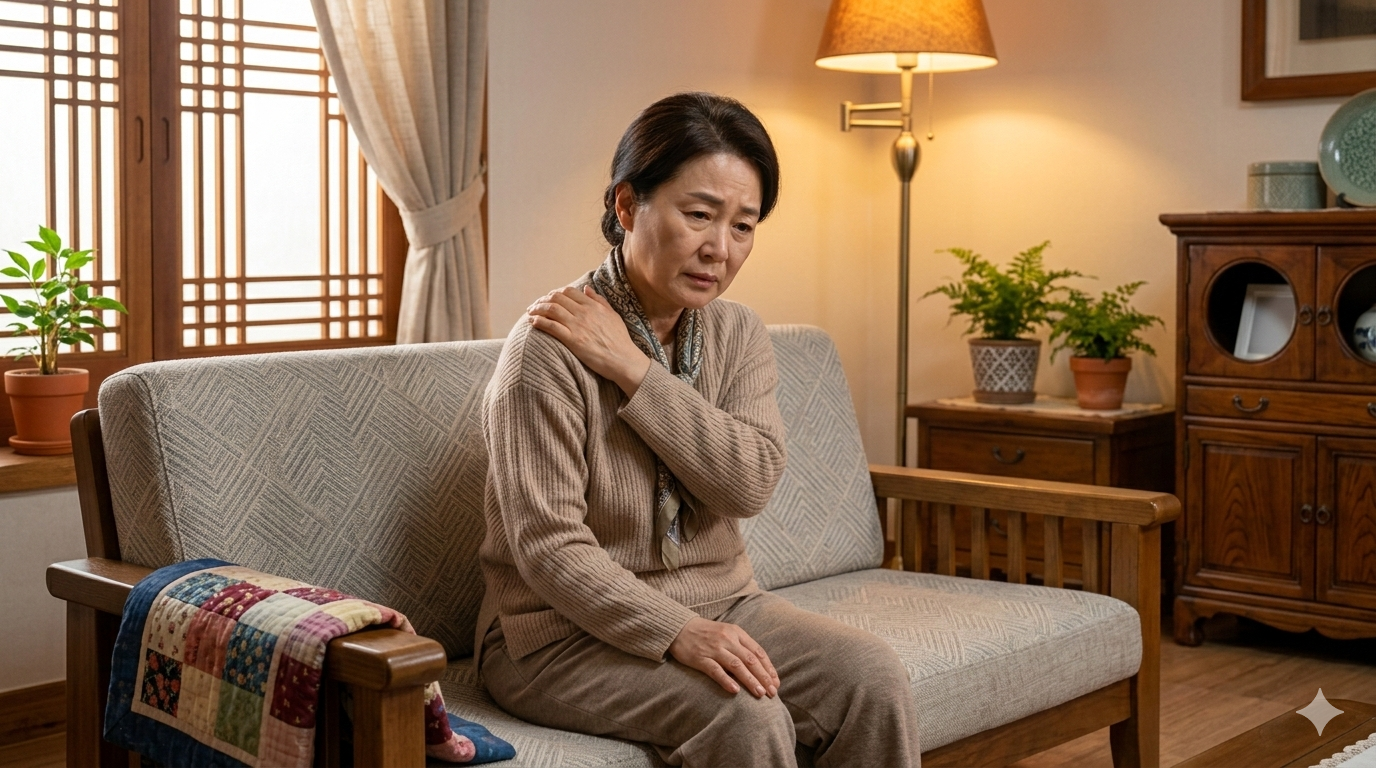
    If you’re over 40 and your shoulder is gradually becoming stiffer and more painful without any injury, you may have frozen shoulder (adhesive capsulitis).

    What is Frozen Shoulder?

    The Medical Facts

    Frozen shoulder (adhesive capsulitis) occurs when the shoulder joint capsule becomes inflamed and fibrotic, causing pain and progressive loss of motion. It typically affects people aged 45–65 and is 2–4 times more common in diabetics.

    The hallmark sign: both active AND passive movement are restricted. Even if someone else tries to move your arm, it won’t go.

    Why Does It Happen Around Age 50?

    Recent aging research (Stanford University, Nature Medicine 2019) shows that aging isn’t gradual — it occurs in bursts at specific ages, particularly around mid-40s and 60. The shoulder is the body’s most mobile joint and requires significant fluid lubrication. When age-related fluid metabolism decline hits, the shoulder is often the first to suffer.

    The Korean Medicine Perspective

    Korean Medicine calls this “Gyeon-bi” (肩痺) — stagnation of qi and blood circulation around the shoulder, leading to inadequate nourishment of the joint capsule, tendons, and ligaments. As the body’s fluid (津液/jinye) decreases with age, joint tissues lose elasticity and become prone to chronic inflammation.

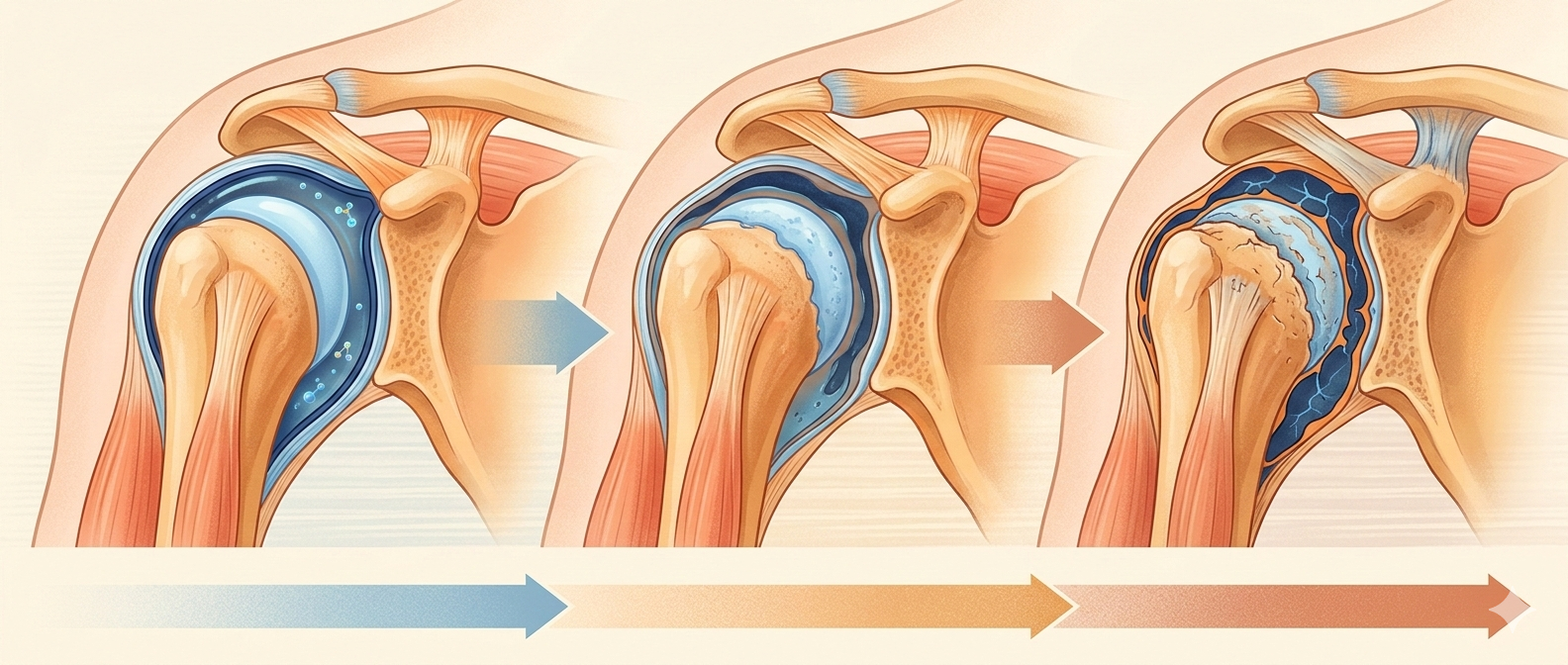
    The Three Phases — And Why Timing Matters

    1. Freezing phase (painful): Inflammation is active. Focus on pain management. Acupuncture + pharmacopuncture to reduce inflammation.
    2. Frozen phase (stiff): Inflammation subsides but the joint is locked. Begin gentle Motae Hwangol therapy (including Chuna) to restore range of motion.
    3. Thawing phase (recovery): Aggressive rehabilitation, stretching, and strengthening.

    The mistake many people make: forcing movement during the freezing phase (making it worse) or doing nothing during the frozen phase (letting it stiffen further).

    Korean Medicine Treatment Approach

    • Acupuncture + Pharmacopuncture: Pain relief and local inflammation management
    • Motae Hwangol therapy (including Chuna): Progressive joint mobilization — external rotation → abduction → forward flexion. Jibon Jeonju Clinic specializes in Motae Hwangol therapy (Chuna).
    • Herbal medicine: Support circulation and address constitutional factors (especially if menopause is concurrent)

    Frequently Asked Questions

    Will frozen shoulder really heal on its own?

    It often improves over 1–3 years, but many patients retain permanent range-of-motion limitations. Early treatment leads to faster, more complete recovery.

    Is frozen shoulder related to menopause?

    Yes. Women around menopause have higher rates of frozen shoulder. Estrogen decline may accelerate joint capsule fibrosis. Treating both conditions together improves outcomes.

    Can I get Motae Hwangol therapy (Chuna) for frozen shoulder in Jeonju?

    Yes. Jibon Jeonju Clinic (Dr. Noh Young) specializes in Motae Hwangol therapy (including Chuna) for frozen shoulder and other musculoskeletal conditions.


    Jibon Korean Medicine Clinic

    Gwangju: Dr. Kim Tae-gang (Musculoskeletal/Motae Hwangol, 18 yrs) & Dr. Noh Jeong-eun (Autonomic/Circulation, 22 yrs, Ph.D.)
    Jeonju: Dr. Noh Young (Motae Hwangol specialist)

  • Long COVID: Why Recovery Looks Different for Everyone

    Long COVID: Why Recovery Looks Different for Everyone

    Long COVID: Why Recovery Looks Different for Everyone

    “It’s been months since I tested negative, but I still can’t think clearly.”

    “I used to run 5K easily. Now I’m exhausted after walking up stairs.”

    If COVID is “over” but your body hasn’t gotten the memo, you may be experiencing Long COVID — and you’re not alone.

    Understanding Long COVID

    The Medical Facts

    The WHO defines Long COVID (Post-COVID Condition) as symptoms persisting or appearing 3 months after infection, lasting at least 2 months, with no other explanation. The ECDC (2023) reports that approximately 10–20% of COVID patients develop long-term symptoms.

    Over 200 different symptoms have been reported, but the most common are: fatigue, brain fog, shortness of breath, joint/muscle pain, and sleep disturbances.

    The Korean Medicine Perspective

    Korean Medicine analyzes Long COVID through three axes:

    • Residual inflammation (餘熱/yeoyeol): The acute infection is gone, but low-grade inflammation persists in tissues
    • Vital energy depletion (正氣虛/jeonggiheo): The immune battle consumed the body’s reserves, leaving chronic fatigue
    • Organ-level damage: Lungs, gut, brain, and autonomic system may have sustained functional damage

    Different patients present with different dominant axes, which is why symptoms vary so widely from person to person. Korean Medicine’s strength is in identifying which axis is dominant and tailoring treatment accordingly.

    Real Clinical Experience

    At Jibon Clinic, we’ve observed that Long COVID patients fall into recognizable patterns. Some have persistent low-grade fevers and inflammatory markers — they need inflammation-clearing herbs. Others have profound fatigue with normal lab results — they need energy-restoring treatment. Many have both. Treatment is adjusted as the patient’s condition evolves.

    Frequently Asked Questions

    Can Korean Medicine help if I’ve had Long COVID for over a year?

    Yes. Even chronic cases can improve. The treatment approach shifts from acute inflammation management to deep constitutional recovery.

    Should I stop my Western medications to try Korean Medicine?

    No. Korean Medicine can be used alongside Western treatments. Never stop prescribed medications without consulting your prescribing doctor.

    What does treatment typically involve?

    A combination of herbal medicine (tailored to your specific symptom pattern), acupuncture (for autonomic regulation and circulation), and lifestyle guidance. Treatment plans are individualized.


    Jibon Korean Medicine Clinic

    Gwangju: Dr. Kim Tae-gang (Musculoskeletal/Motae Hwangol, 18 yrs) & Dr. Noh Jeong-eun (Autonomic/Circulation, 22 yrs, Ph.D.)
    Jeonju: Dr. Noh Young (Motae Hwangol specialist)